Latest News

Insurance Industry pleased with its investment in ‘Maths Workshops’


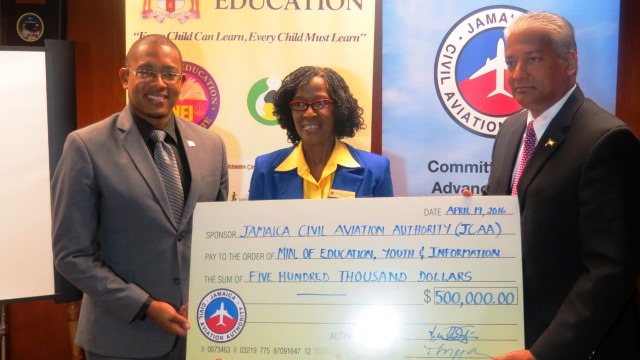
The Insurance Association of Jamaica (IAJ) recently spent just under $800,000 sponsoring four workshops for teachers of mathematics and integrated science in Montego Bay, Runaway Bay, Toll Gate and Kingston.The purpose of the workshop is to equip teachers to properly prepare their students to sit the Caribbean Secondary Education Certificate exams in a few months’ time.


Peter Levy, Vice President for General Insurance at the IAJ and CEO of British Caribbean Insurance Company, expressed the IAJ’s pleasure with its investment in the Mathematics Workshops organised by the Ministry of Education and sponsored by the IAJ over the last three years. He noted that in 2012 the CSEC Maths pass rate was 37.5 per cent.In 2013, the first year of the IAJ’s involvement in the workshops, the rates climbed to 42.2 per centthen jumped to 55.5 per cent in 2014 and increased to 62 per cent in 2015.


Levy in his address to the attendees noted that “Mathematics is more than a set of skills that make life more manageable – mathematics is a way of understanding the world around us.” He challenged the teachers to convey practical examples of the application of mathematics in everyday life to help to demystify it and make it more accessible to every student.


“You can’t correctly decide which cellular plan is right for you, without using Mathematics. You can’t manage a household budget, and stretch your paycheque efficiently, without using Mathematics. You can’t effectively compare different car loans, without using Mathematics,” Levy stated.

The Insurance Industry has been involved in promoting mathematics in schools through competitions among schools for over thirty years, and recently has been concentrating on initiatives like these workshops that up skill teachers.


Photo Caption

Peter Levy (right), vice-president of the Insurance Association of Jamaica presents sponsorship cheque to representatives of the Ministry of Education –Caroll Baker (left), education officer for science, and Davion Leslie, maths coordinator for Region One, during the recent workshop for maths and science teachers held in Kingston.


Public Libraries to Provide Job Information


Minister of Education Ronald Thwaites has endorsed an agreement between the Jamaica Library Service (JLS) and the Ministry of Labour and Social Security (MLSS) to provide the public with access to its Labour Market Information System (LMIS) utilizing public libraries.


According to Minister Thwaites the initiative is a very good use of the Library Service’s island-wide network and its recently acquired communications infrastructure.


“There are many current and emerging opportunities for employment that the widest number of people across Jamaica needs to know about in order for unemployment, particularly among youth, to continue to trend down,” said Minister Thwaites at the February 3 signing ceremony. “The information provided through the Labour Market Information System can help to guide students, and parents in making career decisions,” he added.


The Education Ministry, he said, expects that guidance counselors and teachers to point students to the facilities at the public libraries.


Meanwhile, Minister of Labour and Social Security, Dr Fenton Ferguson, in endorsing the partnership said the initiative is a practical and prudent way to deliver necessary services and programmes to the people of Jamaica.


“I must urge Jamaicans to take advantage of employment opportunities. This partnership with the Jamaica Library Service will, therefore, open the gateway for more Jamaicans to access reliable labour market information,” Dr. Ferguson said. “It will provide the first step towards obtaining the necessary skills needed and to efficiently locate decent jobs.”


He indicated that the partnership manifests the pooling of available resources from the two government entities noting that employees of the libraries will be trained to give guidance on where to locate information on the website and how to register and search for jobs on the LMIS website.


Dr Ferguson said that the MLSS recognized that greater access to the Internet could lead to greater access to employment opportunities.  He thanked the JLS for providing the opportunity which will see students, jobseekers and other uses of the libraries accessing the web-based LMIS.


“Through the LMIS database, employers and investors will know where to locate certified and uncertified skills. Policy makers will know where there is an under-supply or over-supply of skills and take corrective actions. The process, therefore, will advance productivity improvement and country competitiveness in the global marketplace. 


Since its inception in 2001, the system, which is maintained by the MLSS, has been providing cost effective ways for employers to source and recruit suitable employees, as well  as for job seekers to post resumes for possible employment.


To date more than 11,000 job seekers have visited the site, with 520 employers recruiting individuals from the jobs posted. Over 700 jobs have already been posted with 158 of the Programme of Advancement Through Health and Education (PATH) cohort of 1500 having used and are connected to the system.


The Jamaica Library has been providing information, educational and recreational programmes and services through a network of 118 fixed public library locations, 374 mobile library stops and 894 school library networks across the island.


Karen Barton, Director General of the Jamaica Library Service (JLS) said it was fitting that the Inter-American Development Bank found it necessary to partner with the MLSS to connect the labour market with job opportunities.


“This partnership comes at an opportune time especially in an ever expanding digital world. The labour market is changing and various jobs are in demand Barton said. “This partnership recognizes the network that will be created to give persons an opportunity to access job opportunities,”


The Labour Market Intelligence is the third component. This is a combination of current and historical data on the local economy, population and labour market and also includes information on training opportunities for the youth, sources of funding for education, the most frequently advertised jobs, and summaries of labour market research conducted by MLSS.


The LMIS has three components, the Electronic Labour Exchange (ELE), Skills Bank, and the Labour Market Intelligence. The ELE, which is the core component of the LMIS, facilitates the matching of job seekers with employers, and provides both online and offline services to both parties.


The online services include: tips on resume writing, preparing for interview, job search and career counseling. The offline services include: assisting employers to post jobs, interview and shortlist candidates. The second component is the Skills Bank, which is a database of certified Jamaicans, with varying skills.


 Photo Caption:

Minister of Education Ronald Thwaites (centre) accepts from Minister of Labour and Social Security Dr Fenton Ferguson a copy of the signed MOU between the JLS and LMIS. Witnessing the occasion from left are Karen Barton, Director General, JLS; Paul Lalor, Chairman JLS Board; and Colette Roberts Risden, Permanent Secretary, MLSS.


Ministry To Provide 400 Math, Science Teachers Scholarships

The Ministry of Education, in collaboration with teacher-training institutions, will embark on a vigorous recruitment drive to identify potential candidates from the secondary school cohort for its Mathematics and Science scholarship programmes.
Continue reading “Ministry To Provide 400 Math, Science Teachers Scholarships”

Minister of Education Launches Jamaica Day 2016

Remarks by Hon. Rev. Ronald Thwaites, Minister of Education

Launch of Jamaica Day Celebrations, February 16, 2016


Salutations and Acknowledgements


TEXT

Jamaica Day is an important point of reflection, particularly in schools. This is when we identify and celebrate excellence among the Jamaican people.


The Ministry of Education takes seriously our responsibility to instil moral and social values in our children. This includes giving and reinforcing a positive view of self.


We do this in a variety of ways: through the Health and Family Life Education curriculum, the Valuable Pathways programme and the teaching of Civics among other initiatives.


In this regard, we have produced a series of textbooks exploring the lifestyles of several of our national heroes including the most internationally known among them, the Rt Excellent Marcus Mosiah Garvey.


Our hope and intention are for the education system to produce students who respect and love God, country and compatriots.


We who are in the education system need to consistently lift the spirits of our children and youth  –so much negativity is around them via the popular culture.


This presents a challenge to educators to be role models and mentors that inspire greatness in our children.


One of the areas in which Jamaicans excel is the arts -more so in the performing arts. We love to dance, sing, recite poems deejay, as well as write lyrics for songs and poems.


When we combine our skills in both the fine and performing arts what stands out is our creativity as a people. This creativity is now showing itself in our ability to be animators [Expand on earning potential].


And creative skills can be applied to other areas such as design for a multiplicity of media platforms including websites and digital gaming technology.


This is why it is important for us to integrate our artistic skills with competencies in Science, Technology, Engineering and Maths to get STEAM.


So for Jamaica Day, 2016 let us celebrate the artist or artiste in us for we are a creative and expressive people.


It is my pleasure to launch Jamaica Day Celebrations which will be observed in our schools on Friday, March 4, 2016.

Education Achievements in 2015

Statement by
Hon. Rev. Ronald Thwaites
Minister of Education

Press Conference, January 15, 2016

ACHIVEMENTS IN 2015
Last year the education enterprise made some outstanding gains.
•    We surpassed the literacy target of 85 per cent mastery at grade four
•    The numeracy rate moved from 49 per cent in 2011 to 67 per cent in 2015
•    The largest number of students recorded perfect scores in GSAT
•    CSEC math passes increased significantly three years in a row
•    30 primary and high schools received additional classrooms totaling more than 200 since 2012
•    More than 20 schools were removed from the shift system totaling 50 since 2012

The Ministry’s focus this year is to ensure that the gains from last year are exceeded and that the momentum is accelerated.

REGISTRATION FOR EXAMINATIONS
We start by appealing to parents and school administrators to ensure that children are registered to sit the relevant examinations.

GSAT: Schools are asked to ensure that all candidates eligible to sit the GSAT are duly registered. Those requesting Special Accommodations should submit psycho educational assessment to the Student Assessment Unit by Monday January 17, 2016.
The syllabus for GSAT remains the same as last year. There are no adjustments.

The Grade Four Literacy and Numeracy Test will be held on June 28 & 29, 2016 in all primary level institutions. Private candidates are to be registered at the nearest regional offices
Grade eleven exit exams: Although the deadline closed yesterday to register for the National Vocational Qualification Jamaica (NVQJ), Caribbean Vocational Qualification (CVQ) and City & Guilds examinations, the Ministry is willing to assist anyone who was unable to do so because of unaffordability.

INCENTIVISING MATH AND SCIENCE TEACHERS
If the positive trend in mathematics outcomes is to be maintained and the decline in CSEC examination passes in the sciences is to be arrested, then the Ministry has to move with alacrity to address the chronic shortage of these subject teachers.

The situation has been aggravated by the loss of close to 500 teachers of Math and Science at the secondary level to local/overseas employers between the 2014 and 2015 academic years.

To address this urgent situation the Ministry of Education has developed some proposals. They are as follows:
?    Revision and reactivation of protocol for regulating the recruitment of Jamaican teachers by foreign entities.

?    Develop programmes for the delivery of the specialised subjects through media and ICTs, with support from recruiting countries where possible.

?    The Jamaica Teaching Council, with support from other relevant entities, is to undertake a 5-year forecasting of teachers needed in the system.

?    Provide scholarships for the specific subjects, that are tenable at the universities or teacher training institutions
?    Increase teachers’ colleges intake and enter into a payment arrangement with these students such as providing  bursaries and/or scholarships
 Discussions have started with The Mico University College, Sam Sharpe Teachers’ College and the University of Technology to train 600 teachers in mathematics, science and emerging TVET areas, starting September 2016. Fifty two scholarships and bursaries have been awarded already. VTDI will also be involved in this arrangement.

?    Institute bonding arrangements commensurate with the support received from the Government

The Ministry has shared these proposals with  the leadership of the Jamaica Teachers’ Association who have agreed to serve on a joint working committee to refine them for Cabinet approval and implementation.

NEW CURRICULUM
This year the Ministry will roll out on a phased basis the new National Standards Curriculum for grades one to nine starting in September. For 2016/2017 the implementation will be in grades 1, 3,5,7,9 and in grades 2,4,6,8 at the beginning of the 2017/2018 academic year.

The goal of the National Standard Curriculum is to improve the general academic performance, attitude and behaviours of students which will redound to the positive shaping of the national social and economic fabric.
Features
The National Standard Curriculum has several features including:
1. Standard-based: Standards are now provided for students to develop competencies (thinking and personal skills, and understanding/appreciation of Jamaica’s rich heritage)

2. New teaching and learning approaches including
?    Increased emphasis on project-based and problem-solving learning with STEM/STEAM integrated at all levels. These approaches will allow the learner to have hands-on experiences that are similar to real-world situations. Thus, the learning experience will be less abstract and more concrete.
?    Greater emphasis on deep/high order thinking (depth of knowledge)
?    Allowing students to utilize their own talents and experiences in the teaching learning process.
?    Increased use of ICT as a tool for teaching and learning, but not to the detriment of the student using real objects and exploring inside and outside the classroom setting.
3. Changes to Subjects
?    Civics will return to be a discrete discipline
?    TVET and Spanish will be formally introduced at the primary level
?    Geography and History have been separated from Social Studies and will be offered separately starting at Grade 7.
?    Chemistry, Biology and Physics have been separated from Integrated Science and will be offered separately starting at Grade 9. These changes aim to ensure that the requisite foundation for the CSEC level in these disciplines is laid during the lower secondary years.

4. Assessments and Examinations
?    An Age-four assessment will be done at the Early Childhood level
?    The Grade 1 evaluation for readiness -GOILP – will be revised
?    The Grade 3 diagnostic test will be shifted to Grade 2
?    The Grade 4 Literacy and Numeracy tests remain but will be modified as one examination
?    At Grade 6, the Primary Exit Profile (PEP) will replace the GSAT. The PEP will comprise three components. PEP will be introduced in 2018, so the public will be provided with more information in due course
?    At Grade 9 there will be a diagnostic assessment. The current external exit examinations at Grade 11 will remain. Additionally, there will be a National School Leaving Certificate.

WORK-READY EDUCATION AND TRAINING
One of the outcomes of the problem-based instruction under the new curriculum is that it acquaints students with work ethics and employability skills that will be advantageous to them when they enter the world of work.

Preparing students for industry is also a focus of the education enterprise for this year. The HEART Trust/NTA is the agency under the Ministry of Education charged with the mandate to link people with   employment.

Commendations are due to the Board and Management of the agency for their efforts in this regard last year and for their willingness to increase the momentum going forward.

Announcement of MSME Support Programme
I wish to announce that the HEART Trust/NTA will be launching an initiative to assist Micro Small and Medium Enterprises (MSMEs) in keeping with its mandate to create employment opportunities for its trainees while also providing financing for employment programmes.

The MSME Support Programme will have three distinct components which will provide assistance for Trainee Starts-ups, Export-Based Small and Medium Enterprises (SMEs) and General MSMEs.

Eligible entrepreneurs can access a grant of up to $3 million depending on the support category. SMEs will receive up to $3 million to boost exports through the Export Max initiative being spearheaded by Jamaica Promotions (JAMPRO).

Other selected MSMEs will receive a grant of up to $3 million and participate in a business development programme. Additionally, a select group of HEART Trainee Start-ups will receive a grant of up to $100, 000 to purchase tools and equipment. They will also receive business development training for 18 months.

Other initiatives to support entrepreneurs include Specific Industry Intervention, the HEART SmartTraq Training Programme, Entrepreneurship Clubs and Customized Training.

Expansion of Training for Tourism and Hospitality
In response to the recent announcements of significant local and foreign direct investments in the tourism and hospitality industry, the HEART Trust will expand the College of Hospitality Services  to significantly increase its capacity.  The Trust will also increase emphasis on higher level training programmes, equipping candidates to become supervisors, managers and entrepreneurs. 

At its current capacity the HEART Trust/NTA is able to certify approximately 5,732 hospitality and tourism workers annually.  This will be increased over the next 5 years.  Since 2011, the Agency has trained 28,659 hospitality and tourism professionals.

Developments in Business Process Outsourcing
Collaborative effort was initiated between the Agency and the Business Process Industry Association of Jamaica (BPIAJ) to ensure Jamaica is able to robustly respond to the growing demand in the sector. The HEART Trust/NTA now trains BPO professional in 13 institutions eleven of which are located in the North Western region of the island, where most Business Process Outsourcing (BPO) firms are located.  Since April 2015, 774 participants have been enrolled for training.

HEART Trust/NTA is involved in other activities such as Career Development and Labour Market survey which I will ask Dr Wesley to comment on later.

Occupational Supervisory Certification
An Occupational Supervisory Certification programme is being developed by the Joint Council of Tertiary Education (JCTE), through the chairman Dr Cecil Cornwall, to provide a certification pathway for skilled professionals in industry.
We will say more about this in due course

MINISTRY MODERNISATION
The re-engineering of the Ministry of Education gained significant momentum in 2015. The creation of the Department of School Services (DSS) will allow the Ministry to separate its policy functions from its operational mandate, thereby facilitating greater levels of efficiency and emphasis on school improvement.

The re-engineering of the Ministry’s structure is in keeping with the on-going Public Sector Modernisation Programme, which in the case of the Education Ministry will result in the creation of a Central Policy Ministry and the DSS. Already, the head of the DSS along with three other officers have been named, following a mapping exercise focusing on personnel in the MoE. That exercise continues and should be well advanced by the time the DSS is launched in the first quarter of 2016.

ISSUES IN THE NEWS
Counselling of LGBTQ students
Deployment of Guidance Counsellors: 806 counsellors are deployed to approximately 564 primary and secondary schools. The majority of all counsellors are located in secondary level schools where counselling was first introduced. With few exceptions, secondary schools have been allocated two counselling posts. Not all primary schools have counsellors on staff.  However, the Regional Guidance Officer’s remit is to serve all schools within a region

Ethics and Standards: Guidance Counsellors in Jamaica are expected to adhere to international ethics and standards in field which include
a)    Ethics and principles involved in the one-to-one counselling relationship, including client confidentiality and the importance of obtaining informed consent for any intervention.
b)    Respect for the rights and dignity of the client, including freedom from discrimination and the right to privacy and respect for self-determination.
c)    The responsibility of Guidance Counsellors to act in a responsible and reputable manner, and to avoid any harm to clients. This is linked to the acceptance of a special duty of care towards children, and the importance of always acting in the best interests of the child.
d)    Integrity, honesty and fairness in the practice of Guidance and Counselling. This includes avoiding conflicts of interest and client exploitation.

Corporal Punishment
The Ministry continues to discourage the use of corporal punishment in schools. A team led by the Chief Education Officer is reviewing all matters relating to corporal punishment alongside the suite of behaviour management programmes, various legislations and conventions and will in short order give directions to boards and administrators.

The Ministry has been implementing a series of behaviour management programmes across selected schools that provide students and staff with the knowledge and skills to promote positive behaviour and change.

Last year the Ministry’s Safety and Security Unit conducted rigorous professional development sessions for all Deans of Disciplines as well as introduce new and revised safety guidelines. We appeal to schools to use the resources and tools they have been given to maintain a peaceful and harmonious environment in schools.

Thank You.

Education Programme Launched for PATH Parents

November 12, 2015

The Programme of Advancement Through Health and Education (PATH) has partnered with the National Parenting Support Commission to launch an initiative aimed at increasing parenting skills to ensure that children are healthy and ready mentally and socially to engage the education system at grade one.


Nine hundred parents from six parishes will participate in the Parenting Empowerment Programme, which will be piloted for twelve months starting this month.  The participants will attend workshops at the community level focusing on the areas of nutrition, discipline, safety, learning, and health needs. The information shared at the workshops will be reinforced through home visits.  


This disclosure was made by Mrs Scarlett Duncan,Social Marketing Manager for PATH at the Ministry of Labour and Social Security. She was speaking recently at the launch of Parents’ Month, which is being observed under the theme Parents Take Time, Be Involved. Parents’ Month activities are being coordinated by the National Parenting Support Commission, an agency of the Ministry of Education.


Mrs Duncan disclosed that the PATH parenting pilot project is being implemented as part of the Integrated Social Protection and Labour Programme in the Ministry of Labour and Social Security that is funded by the Inter-American Development Bank.  One of the main aims of this broader programme is to support PATH conditional cash grants, and strengthen the system through the introduction of parenting education for households with children two to six years old. 


Noting that currently children in families on PATH are required to attend the health centre twice per year to maintain their benefits Mrs Duncans said that the parenting education pilot will explore the possibility of adjusting this requirement. This would result in children visiting the health centre once per year and their parents required to attend parenting workshops.


The PATH Social Marketing Manager noted that the launch of the Parenting Empowerment Programme represented a deepening of the partnership between the Ministry of Labour and Social Security and the Ministry of Education. The PATH Unit and the National Parenting Support Commission jointly developed the curriculum for the parenting workshops. The parenting education pilot will be implemented in Kingston, St. Thomas, Portland, Clarendon, St. Ann and St. James. 

JAMAICAN STUDENTS SCORE HIGH ON CITY & GUILDS EXAMS

October 20, 2015:


JUST RELEASED data has shown that Jamaican students performed creditably in the latest City & Guilds mathematics and English examinations.


Last year the Ministry of Education decided to underwrite the cost for 10,000 students to write City & Guilds Maths and English in a move to expand the options for external examinations available to students.


Some 11,000 students enrolled in Grade 11 and the Career Advancement Programme (CAP) wrote these exams. Eighty-four percent of CAP students attained a pass in Maths and 78 per cent in English, while the Grade 11 cohort achieved a 71-per cent pass rate in Maths and 60 in English.


In 2011 the Ministry of Education signed a contract with City & Guilds for the delivery of examinations in Mathematics and English in all CAP centres island-wide. The partnership was strengthened in January 2012 when the Ministry named 150 public high schools as City and Guilds centres for registration of Grade 11 students in Maths and English.  This is in keeping with the Ministry’s commitment to ensure that all Grade 11 students in Jamaica have the opportunity to write external examinations in Maths and English.


In September 2014 City & Guilds International launched two new qualifications in Maths and English.   The qualifications facilitated a staged approach across three levels.   Each stage is a free-standing single subject with its own certification, and is specifically designed to be a more “manageable” and self-gratifying approach for students.


Significantly, the English Skills qualification encompasses a unique assessment strategy.   In addition to the usual written exam that is externally assessed, there is a new oral exam (Speaking and Listening) that is internally assessed.  The Ministry of Education believes this approach will help to improve our students’ oral English competence.


Students must be proficient in both the written and oral assessments of the English Skills qualification to achieve the over-arching certification.  Certificates of Unit Credit are given for each assessment, that is, Reading & Writing as well as Speaking & Listening.  This certification strategy provides motivation for students to push forward and succeed.


Marva Duncanson, City & Guilds Representative for Jamaica believes the Ministry’s sponsorship of candidates “has levelled the playing field by giving students a viable certification option as Maths and English form the cornerstone on which all other learning is built so it is critical that students are certified in these areas.” 


According to Duncanson, the main purpose of these globally recognized qualifications is to help learners develop skills at a level necessary to function and progress in life and work.  It also provides a platform for further studies anywhere in the world.  She further noted that City & Guilds is an examination body dedicated to vocational studies with leading market share in the United and delivering qualifications in over 100 countries.  “City & Guilds exclusively offers competency-based qualifications.  We recognize that there are different types of learners and that one size does not fit all.”


Mathematics & Science Education Scholarship Awards

NEWS RELEASE

Education Ministry Grants Scholarships to
Trainee Teachers of Maths and Science

October 11 2015:
THE MINISTRY of Education has awarded mathematics and science education scholarships valued at $14 million to 51 persons pursuing degree programmes at teacher-training institutions across the island commencing this academic year.
Of the total scholarship awardees 42 received full tuition, four received tuition and boarding, while the remaining five received partial tuition funding.

Speaking recently at the official presentation of the scholarships Education Minister Ronald Thwaites pointed out that the country urgently required qualified, competent and zealous mathematics teachers with the requisite knowledge and academic skills to take the quantum leap necessary to teach the subject.
Minister Thwaites disclosed that at the latest count the country has lost 70 to 80 of its mathematics and science teachers to overseas employment, which underscored the need to train and incentivize persons who are still here and wish to teach these subjects.
The Education Minister maintained that insufficient mathematics specialists in schools, poor teaching and teacher qualification remain some of the major factors contributing to the country’s underperformance in the subject, mastery of which, he noted, is critical to the country’s current development pursuit.
According to National Mathematics Coordinator Dr. Tamika Benjamin each awardee must maintain at least a B average throughout the programme of study, and will be bonded to the government upon graduation. The Ministry will place these graduates in schools that will need their support and the expertise that they will have gained over the period of their training,” Dr. Benjamin added.

An elated Orlando Roberts, third year student at the Shortwood Teachers’ College, said he was relieved following his acceptance to the scholarship programme.  “A huge load has been removed from my back. I can get a good night’s rest now and I can concentrate better on my studies,” Roberts said.

For nineteen year-old Chavelle Bennett, a student of the Mico University College, mathematics helps to develop many skills used in every aspect of life.  “Mathematics is everywhere. It makes you gain and understand so many skills including reasoning and analytical skills; and broadens your scope of thinking,” Bennett said.

She received a full scholarship for which she is also grateful. “I am extremely happy. It is a huge load that has been released. All the stress about paying my school fee is gone,” Bennett said.

An overwhelmed Collin Dixon, a student of the Church Teachers’ College in Mandeville, said mathematics for him is not just a subject; he loves it.  “Mathematics helps to develop the mind, reasoning ability and skills. I am happy that I received a full scholarship. I will be able to work even harder and one day I will be able to pass on the knowledge I will gain to my students,” Dixon said.

The Jamaica National Building Society is a partner in the Ministry’s scholarship programme.

——-30——