
Latest News

Grade Four Test results in rural schools show literacy surpassing numeracy

OBSERVER: The percentage mastery figures for the better-performing rural schools across 12 parishes in the 2017 Grade Four Literacy and Numeracy tests are highlighted below.


Schools with very low school and grade four enrolment (under 30 students), while possibly achieving mastery of up to 100 per cent, were not included in this report.


ST THOMAS


Lyssons Primary, with 88.6 per cent mastery, performed best in the parish in the 2017 Grade Four Numeracy Test, while Trinityville Primary (73%) performed second best.


In literacy, high performers were again Lyssons (98.7%), followed by Port Morant (89.7%), Airy Castle (86.5%), Grants Pen (85.1%), Trinityville (84.2%), Duckenfield (83.5%) and Yallahs Primary (82.8%).


ST MARY

With 75.4 per cent of its 80 grade four students attaining mastery in the Grade Four Numeracy Test, Retreat Primary is the top St Mary School for 2017. Following behind is Free Hill (68.3%), Port Maria (65.4%), Goshen (63.3%), Boscobel (62.5%), Oracabessa (61.3%), and Labyrinth (61.1%).


In the Grade Four Literacy Test, performance was much better, with Water Valley Primary topping at 96.2 per cent, followed by Retreat (92.8%), Free Hill (89.7%), Clonmel (87.8%), Highgate (85.3%), Mount Angus (85.2%), Boscobel (84.8%), Port Maria (84.4%), Labyrinth (83.8%), and Goshen (80%).


ST ANN


In the Grade Four Numeracy Test, Lime Hall Primary (90.6%) and Servite Primary (88.5%) were the top performers, while in literacy, Beecher Town Primary with its 30 grade four students clocked 100 per cent mastery, followed by Lime Hall (90.3%), Charlton (82.4%) and Moneague (81.5%).


ST JAMES


In the Grade Four Numeracy Test, Howard Cooke (86.5%) was the top performer, with Bogue Hill and Corinaldi following with 83.3 per cent mastery each.


In literacy, Bogue Hill All-Age, with 97.3 per cent mastery, led the parish, followed by Howard Cooke (96.6%), Corinaldi (95.5%), Chetwood (94.4%), Springfield (93.8%), Success (93.2%), and Barracks Road (90.9%).


HANOVER


In the Grade Four Numeracy Test, top-performing schools were Riverside All-Age (73.3%), Lucea Primary (69.6%) and Esher Primary (61.5%).


For literacy, top scorers were Riverside (96.7%), Cave Valley (96.3%), and Lucea (90.4%).


WESTMORELAND


In the Grade Four Numeracy Test, top performers were Mount Airy (82.2%), Unity (77.4%), and Peggy Barry (73.9%).


In literacy, the 55 grade four students at Mount Airy scored 100 per cent mastery, followed by Unity Primary (91.7%) and Peggy Barry (91.3%).


ST ELIZABETH


In the Grade Four Numeracy Test, Glen Stuart (77%), Lacovia (74.1%), Goshen (73.3%), Mayfield (71.1%), Bull Savannah (70.7%) and Black River (70.3%) were top performers.


For literacy, top performers were Glen Stuart (95.4%) and Crawford (94.4%).


MANCHESTER


Frankfield Primary and Junior High had 100 per cent mastery for their 37 grade four students in the Grade Four Numeracy tests, with the next nearest schools being Ramble (85.7%), McIntosh (84.2%), Christiana Leased (81.6%) and New Forest (81.3%).


In literacy, Frankfield again had mastery for all its students, followed closely by New Green and McIntosh, both with 95.7 per cent. Other top performing schools were Christiana Leased (92.2%) and Villa Road (90.7%).


PORTLAND


In the Grade Four Literacy Test, Boston Primary had perfect scores for its 36 grade four students, and Hope Bay All-Age followed next at 91.3 per cent mastery.


For numeracy, Hope Bay was on top, with 87 per cent of students achieving mastery.


ST CATHERINE


In the Grade Four Literacy Test, Kensington and Angels had 100 per cent mastery, with other top- performing schools being Greater Portmore (99.5%), Southborough (96.3%), Ewarton (95.6%), Portsmouth (95.4%), St Catherine (95.3%), Ascot (95.2%), Waterford (93.6%), Jericho (91.5%) and Marlie Mount (90.8%).


In numeracy, Kensington was the top performer with 99 per cent mastery, followed by Angels with 93.2 per cent.


CLARENDON


In the Grade Four Numeracy Test, the 34 students at Sanguinetti Primary had 100 per cent mastery, followed by Kellits Primary with 80.9 per cent.


In literacy, top-performing schools were Ritchies Primary (97%), Mocho (96.3%), Kellits (94.7%) and James Hill (90.2%).


TRELAWNY


In the Grade Four Numeracy Test, Hague and Granville scored at 67.3 per cent mastery, while Duncans All-Age followed at 67.1 per cent.


In literacy, Hastings (84.4%) and Wakefield (82.9%) scored highest.

Literacy, numeracy results show girls outmastering boys

OBSERVER: A total of 232 private schools with a sitting population of 4,365 students had 89.1 per cent mastery in the 2017 Grade Four Numeracy exams, compared to 64 per cent of the total public school students who achieved mastery. Nine point eight per cent of the private school students achieved almost mastery, compared to 27.1 per cent in the public school system, and just one per cent achieved non-mastery in private schools, compared to 8.8 per cent in the public school system.


However, there was a greater percentage point increase in students achieving mastery in numeracy in public schools compared to private schools when compared to 2016, with public schools showing a seven percentage point increase, while private school performance increased by 3.8 percentage points.


The Ministry of Education outlined that of the 765 public schools, 758 entered 33,652 students to sit the numeracy tests. Of the 21,550 students who achieved mastery, 54.8 per cent were girls, and 45.2 per cent boys. Some 19 per cent of the schools (146) performed in the highest quintile or fifth tier (80-100 per cent), and 1.7 per cent (13 schools) fell in the lowest quintile or first tier (0 to less than 20 per cent). The majority of public schools were in the third and fourth quintiles — that is between 40 and 80 per cent.


In the private schools, of the 3,891 students who achieved mastery, 50.6 per cent were girls, and 49.4 per cent were boys. In an assessment of the results from 2013 to 2017, national percentages have shown girls consistently outmastering boys in the numeracy tests for each year.


The ministry outlined that in June 2017, a total of 38,049 students sat the test — 33,652 from public schools, 4,365 from private schools, and 32 from special schools. Approximately 67 per cent of this total achieved mastery, representing a total percentage increase by seven per cent over 2016. Twenty-five point one per cent achieved almost mastery, and 7.9 per cent non-mastery. Of the total 25,441 students who achieved mastery, 54.2 per cent were girls, and 45.8 per cent were boys. Of the 32 students from special schools who sat the exams, 22 per cent mastery was achieved. Boys accounted for 23.8 per cent of those who achieved mastery.


For the Grade Four Literacy tests, a total 49,960 students sat the test from public, private and special schools. Of this number, 38,083 sat the test for the first time (33,680 from public schools, 4,371 from private schools, and 32 from special schools). Some 85 per cent of the total students achieved mastery, 10.7 per cent almost mastery, and 4.3 per cent non-mastery. Of the 32,340 students who achieved mastery, 53.4 per cent were girls, and 46.6 per cent were boys. Approximately 56 per cent (18) of the students from special schools achieved mastery, with boys accounting for 42.9 per cent, and girls 81.8 per cent.


For public schools, the 765 schools with grade four enrolment entered 33.680 students, with approximately 83 per cent attaining mastery, 11.7 per cent attaining almost mastery, and 4.9 per cent non-mastery. The percentage of students achieving mastery increased by four percentage points over 2016.


Of the 28,104 students who achieved mastery, 53.8 per cent were girls, and 46.2 per cent boys. Some 62 per cent (472 schools) performed in the highest quintile or fifth tier, and 0.1 per cent (one school) fell in the lowest quintile.


The ministry said the majority of schools continue to attain mastery levels between 60 and 100 per cent, that is in the fourth and fifth tiers.


A total of 4,371 students from 232 private schools sat the test. These students achieved approximately 97 per cent mastery, 2.8 per cent almost mastery, and 0.3 per cent non mastery. The percentage of students achieving mastery increased by approximately three percentage points when compared to 2016. Of the 4,236 students who achieved mastery, 98.1 per cent were girls and 95.7 per cent were boys.


In an assessment of the results from 2011 to 2017, national percentages have also shown girls consistently outmastering boys in the literacy tests for each year.


Mastery is assigned to the child who has successfully attained the requisite mathematical and literacy knowledge and skills and is considered literate and numerate, while non-mastery means that the child has not mastered any of the combinations of skills tested, and is considered non-literate.


The ministry said achieving a numeracy target of 85 per cent by 2018 requires the collaborative effort of all stakeholders including parents, schools and communities.

Education Minister Wants Bus System for Students in All Parishes

JIS: Minister of Education, Youth and Information, Senator the Hon. Ruel Reid, is on a mission to create a national school bus system, which will provide transportation for students in all parishes.


Speaking at the signing of an $8 million Japan Grassroots Human Security Grant agreement with the Ambassador of Japan, His Excellency Hiromasa Yamazaki, on January 10 at the Office of the Prime Minister, Senator Reid said one of his dreams is to have a society where schools have buses assigned to them.


“We’re looking at an overarching plan to provide transportation for all students. We need 1,000 buses to cover the need of the schools. I have that particular aspiration of a comprehensive national school bus system for a number of reasons, not only for safety, but to get our students to school on time and in a managed and regulated way,” the Minister said.


“While we have this vision for the rural transportation system, we didn’t just sit back. We have committed over $204 million at the start of this academic year towards this particular rural bus system,” he added.


He emphasised that there is a great need for the national school bus system in rural areas, adding that students would be transported more safely, parents would save from the high cost of transportation, and there would be less burden on the rural transport operators with privately owned vehicles.


“The cost for transportation is extremely high in rural areas. We’re talking about small farmers who are essentially just trying to survive. There is a significant number of students in the rural areas who are on the Programme of Advancement through Health and Education (PATH), and they will need the transportation system,” the Minister argued.


Senator Reid pointed out that, on average, about 20 per cent of students are absent from school each day.


“In the recent Survey on Living Conditions, it wasn’t strange to us that an overwhelming majority of those who were interviewed said money was the main fault why they couldn’t send their children to school regularly,” he noted.


Senator Reid said he believes a new comprehensive national school bus system would support PATH.


“We’re doing a lot in trying to get the children to school [through PATH], trying to give them lunch for five days, trying to provide insurance, IDs and books. That’s wonderful, but if the children are not able to get to school, all of those efforts are for naught,” he said.


The grant will cover the cost to purchase a school bus for Oracabessa Primary School in St. Mary.


The Japan Grassroots Human Security Project was developed based on an alliance formed by the Embassy of Japan in Jamaica and the National Education Trust on April 20, 2015. This partnership is aimed at meeting education needs at the primary level in schools in need of assistance.


CAPTION: Minister of Education, Youth and Information, Senator the Hon. Ruel Reid (left), speaks at the signing of a grant agreement with the Japan Grassroots Human Security Project at the Office of the Prime Minister on January 10. Listening (from second left) are: Ambassador of Japan to Jamaica, His Excellency Hiromasa Yamazaki, and Principal, Oracabessa Primary School, Gregory Davis.

Exam Results Encouraging – Senator Reid

JIS: Education, Youth and Information Minister, Senator the Hon. Ruel Reid, is expressing optimism with the results of examinations done at the national level in 2017.


In a national broadcast on January 7 to mark the start of the second term of the 2017/2018 school year, Mr. Reid said the results from the Grade Four Literacy and Numeracy Test were “particularly encouraging”.


He also acknowledged improvements in the Grade Six Achievement Test (GSAT), Caribbean Secondary Education Certificate (CSEC) and Caribbean Advanced Proficiency Examination (CAPE).


Minister Reid hailed the development of the National Qualifications Framework (NQF-J), which aims to bridge the gap between academic and technical vocational qualification.


Launched last February, the framework will provide standardised recognition of all learning, knowledge and skills; enable cross-border recognition of certifications; recognise and benchmark informal learning; and improve access to higher education.


“Our aim is to create a track for the occupational degrees that is separate from traditional degrees,” Senator Reid said.


Meanwhile, Mr. Reid lauded the Jamaican diaspora’s continued partnership “in advancing the education of our children” and assured that “together more can be and will be achieved this year”.


Education Regulation Review Far Advanced

JIS: A review of the Education Regulation of 1980, which outlines the framework under which all schools should operate, is at an advanced stage of completion.


The review is expected to address matters directly and indirectly impacting students’ performance.


These include guidelines regarding instruction hours across school days; safety precautions and equipment; and student behaviour, among other factors.


This was disclosed by Education, Youth and Information Minister, Senator the Hon. Ruel Reid, during a national broadcast on January 7.


Senator Reid said the Ministry has commenced rolling out examination preparation strategies such as workshops and public education campaigns as the Government moves to replace the Grade Six Achievement Test (GSAT) with the Primary Exit Profile (PEP) next year.


He urges parents of students preparing for the 2018 GSAT “to give full support to the children” and encourage them “even when you think they are not taking their work as seriously as they should”.


Meanwhile, Senator Reid assured that the Ministry will continue to support the professional development of teachers as part of a capacity-building endeavour.


The Ministry will, to that end, be working with the National College for Educational Leadership.


“A certification programme with multiple pathways will be developed, including prior learning assessments for those principals who may need this as a requirement to become fully qualified, based on the criteria established for full appointment,” Senator Reid stated.


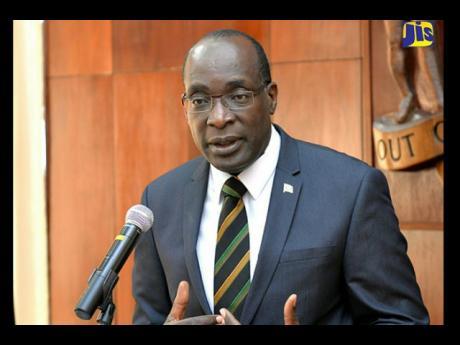
CAPTION: Education, Youth and Information Minister, Senator the Hon. Ruel Reid

Grooming and Nutrition Policy for Schools to Be Outlined

JIS: Education, Youth and Information Minister, Senator the Hon. Ruel Reid, says the Ministry intends to outline the proposed grooming and nutrition policy for schools this academic term.


In a national broadcast on January 7, Senator Reid said this is aimed at promoting a healthier lifestyle among students.


The Minister pointed out that last year, Jamaica did not have a persistent and consistent message regarding healthy lifestyles and good nutritional practices, which, unfortunately, permeated to the country’s schools.


It is in that regard, he noted, that discussions have been held with the Inter-American Development Bank (IDB) to develop nutritional guidelines for schools.


This will also be done in conjunction with the Ministry of Health, with a view to rolling out the policy.


Meanwhile, Senator Reid informed that as part of a wider government policy, stronger emphasis will be placed on the development of Jamaica’s early-childhood education sector.


“To this end, we have provided increased funding, in partnership with the Ministry of Health, and the Ministry of Labour and Social Security, to reactivate the Early Stimulation Programme for mother and child from birth to age three,” the Minister said.


“Our focus is to support the birth to three-year-old group through the Early Stimulation Programme, allowing our babies to be developmentally ready for the three-plus years,” Mr. Reid added.


He pointed out that nutrition, stimulation and protection from violence are critical areas that should be addressed during the first 1,000 days of a child’s life.


“We at the Ministry see our mandate as that of helping our students to develop their intellectual capacity and social skills to advance their personal and national development. We cannot do this without the full involvement of parents and teachers,” the Minister said.


CAPTION: Education, Youth and Information Minister, Senator the Hon. Ruel Reid.

CXC trains teachers for green engineering subject

OBSERVER: Educators from six Caribbean countries, including Jamaica, are in the island for a week-long capacity building project intended to improve their delivery of the Caribbean Advanced Proficiency Examination (CAPE) Green Engineering syllabus.


The syllabus was launched in Guyana in July 2016, and the first papers sat in the exam period of 2017.


Dr Carol Granston, pro-registrar at the Caribbean Examinations Council (CXC), which administers CAPE, said green engineering was introduced among a list of new generation subjects.


“CXC has recognised that the learning population is changing as rapidly as cellphones (and other technology). To catch up with this constant change, CXC launched a set of new generation CAPE subjects. We started working on these subjects from about 2011. Animation & Game Design, Digital Media, Agricultural Science, Performing Arts, Financial Service Studies, Logistics & Supply Chain Operations, Tourism, Entrepreneurship, Physical Education & Sport, Green Engineering,” Dr Granston said.


The organisation also responded to this change by developing an E-strategy. Students and educators can now participate in exams electronically via E-exams, E-testing and E-marking. Already, students have completed paper one exams via the E-exams system. It is expected that the paper two components will be accommodated this year.


The method of teaching has also changed to match with the technology available, Granston said, pointing to the use of digital tool kits in the classroom, as virtual groups for students and teachers. One for principals is reportedly in the pipeline.


“We have developed digital tool kits for teachers and students. It includes animations, short video clips, info graphics and images,” she stated.


Dr Granston was speaking at the launch of the capacity building project at Knutsford Court Hotel last Wednesday.


The countries represented were Antigua & Barbuda, Barbados, Belize, Guyana, and Trinidad & Tobago.


Senior Assistant Registrar Jodine Williams explained that the project was being financed by German Society for International Cooperation (GIZ) .


“CXC is a member of the Capacity Building and Research Working Group of the Caribbean Sustainable Energy Strategy Programme. As a member of that working group, we are pleased to partner with GIZ. We’re partnering with them through their Renewable Energy and Energy Efficiency Technical Assistance (REETA) programme. This partnership also directly involved the Organization of American States (OAS), specifically based on their sustainable energy sector programme,” she continued.


The REETA programme is implemented by GIZ and financed by German Federal Ministry for Economic Operation & Development.


This is not the first project that GIZ REETA has done in capacity building in the Caribbean.


“The programme has supported training workshops at UWI (The University of the West Indies) where faculty and students were trained in various area such as solar PV installation and entrepreneurship. Secondly, there was the development of a master’s programme in sustainable energy and climate change. This multidisciplinary programme is currently being offered at the UTech (University of Technology, Jamaica). Last year saw the first intake of students,” Amanda Harris, a representative from GIZ REETA noted.


She said further that: “The region is in an important phase of development, where its leaders have recognised the importance of keeping abreast of global trends in reducing dependence on fossil fuels, reducing energy cost, and preserving the environment by reducing carbon footprint. Our youths need to be exposed to the basic principles of sustainable energy issues that embrace innovation in a manner that involves aspects of technology as we currently live in the digital age.”


CXC says the study of CAPE Green Engineering will enable students to acquire the knowledge, skills, values and attitudes needed to sustain the natural environment. The course will enable students to apply Scientific, Technological, Engineering and Mathematical (STEM) principles to improve their environment at the local, regional and global levels.

Physical Activity Must Be Incorporated into Teaching

JIS: Minister of Education, Youth and Information, Senator the Hon. Ruel Reid, has called on teachers to incorporate physical activity and play into teaching at all levels of the primary and secondary school systems, in order to enhance students’ learning.


Speaking at the Central Connecticut State University (CCSU) Joint Alumni Professional Development Conference 2018, at the Sam Sharpe Teachers’ College in St. James on January 4, the Minister said engendering and promoting physical activity in the delivery of lessons, “inside the classroom and outside”, should be given prime consideration.


“Over the past decade, in study after study, in animals and people, exercise has been shown to improve the ability to learn and to remember. With our young people’s preference for computer games and a more sedentary lifestyle, obesity and lethargy have increased among the youth,” Mr. Reid noted.


“That is why we are encouraging more of our schools to look at having some form of physical activity at all levels. The tendency has been to make Physical Education (PE) optional after grade nine. We believe it should be mandatory up to grade 13. The aim is not primarily to force people but to encourage them to see the importance of a healthy diet and regular exercise to their overall well-being,” the Minister added.


He told the audience that the promotion of play and physical activities as part of the instruction process, ought to be undertaken in a manner that enables them to complement each other.

(more)


Mr. Reid said this could also be integrated into the assessment process. “There are activities which students can do based on the direction given to them by teachers that can form part of the assessment regime,” he added.


The Minister pointed out that teachers can use the concepts of running or walking long distances and the lifting of weights to teach basic math and science.


“When we help our children to make the link between the theory and the practical, real education would have taken place,” he said.


On the issue of nutrition in schools, Mr. Reid expressed concern about the saturated fats and high sugar content in foods being served in many places of learning.


He said that, as a consequence, the Ministry is currently in discussions with the Ministry of Health to develop a nutritional policy, which is expected to be made public in short order.


“Some scientists are also pointing to a direct link between high saturated fat intake and mental performance. Tests have shown that many items popular in school cafeterias, such as hamburgers, chicken nuggets, pizza and French fries actually lower students’ ability to stay awake and concentrate. A dramatic drop in energy due to digestion of heavy foods leaves kids feeling lethargic, irritable and unable to focus,” the Minister said.


“That is one of the reasons why we at the Ministry have proposed that schools reduce the sale of drinks that have high sugar content,” he added.


The conference was held under the theme ‘Sound Minds in Sound Bodies: Physical Fitness for Optimal Learning’.


It was organised by the Eastern and Western Alumni Chapters of the CCSU, the Jamaica Educator Development and Support Network and Sam Sharpe Teachers’ College.


CAPTION: Minister of Education, Youth and Information, Senator the Hon. Ruel Reid, demonstrates physical activity as he accepts a gift and gym bag from Dr. Jean Beaumont, following his address at a Professional Development Conference, which was staged by the Central Connecticut State University Joint Alumni at the Sam Sharpe Teachers’ College in St. James on January 4.

Senator the Hon. Ruel Reid, Minister of Education, Youth and Information Back to School National Broadcast

JIS: As we begin this new school term, let me take this opportunity to extend Happy New Year greetings to all stakeholders in our education system including our hard working teachers, students, parents, board members, administrative, ancillary, and Ministry of Education, Youth and Information staff.


Each new year brings with it opportunities for renewal and a new focus, and this year will be no different.


Whatever is achieved nationally, will be dependent on what we do as individuals, working together as teams in an extended chain of activities.


Let us therefore go forward with a renewed sense of hope and belief in our collective abilities to find sustainable solutions to new and long-standing challenges in our education sector.


We can look back at the year just ended with some satisfaction that much was achieved in advancing access to education by more of our students.


We are pleased that with the allocation of more financial resources, our schools were better able to manage their administrative functions.


There was also increased support for additional infrastructure development and maintenance of selected primary schools.


With more money being put in the system, the Government now spends just over $37.6 billion, on secondary education alone. This includes funds for salaries, grants, TVET, ICT, science, infrastructure, furniture and nutrition. That means depending on the school population that some institutions have a higher per capita of $119,000 while others saw $176,994 per capita at the secondary level.


Through targeted intervention, teachers at the primary and secondary levels were helped in specialised workshops to better prepare themselves and their students for national exams. The results from the Grade 4 Literacy and Numeracy Tests were particularly encouraging and improvements were recorded in GSAT, CSEC and CAPE.


We must again say special thanks to our teachers for their dedication and professionalism in going beyond the call of duty in delivering a high quality product to our children.


We are also pleased that we were able to develop the National Qualification Framework and this was launched in February.  In this way, we have begun to bridge the gap between academic qualification and technical vocational qualification. Our aim is to create a track for the occupational degrees that is separate from traditional degrees.


We ended the year with the good news that more than 100 early childhood institutions had met all the operational standards of the Early Childhood Commission to be fully certified. We will continue the work to ensure that more of our basic schools achieve the set standards.


In this new year we will have the opportunity to consolidate and finalize policy positions to support improved performance in the system.  The review of the Education  Regulations (1980) is far advanced and when completed will address matters which have a direct or indirect impact on students’ success.


As we move ahead with plans to replace the GSAT with PEP next year, we have already started to roll out our examination preparation strategies with workshops and public education programmes for teachers and parents.


With our students in Grade 6 now in the final preparation stages for GSAT, I implore all parents to give full support to your children. Encourage them; do not abuse them even where you think they are not taking their work as seriously as they should.


During the course of this term we also intend to outline the proposed grooming and nutrition policy for schools.  This is aimed at promoting a more healthy lifestyle among our students.


In addition, as part of wider Government policy, we have made a commitment to place stronger emphasis on the development of Jamaica’s early childhood education sector. To this end we have provided increased funding in partnership with the Ministry of Health and the Ministry of Labour and Social Security to reactivate the Early Stimulation Programme for mother and child from birth to age three.


Our focus is to support the birth to three (3) years old group through the Early Stimulation programme allowing our babies to be developmentally ready for the three-plus years.


Nutrition, stimulation and protection from violence are three of the critical areas that should be addressed during the first 1, 000 days and we intend to step up the support in this area, this year.


We at the Ministry of Education, Youth and Information see our mandate as that of helping our students to develop their intellectual capacity and social skills to advance their personal and national development. We cannot do this without the full involvement of parents and teachers.


The Ministry will continue to support the professional development of teachers as part of our capacity building programme.    In  this regard, the National College for Educational Leadership (NCEL) has trained over 2000 school leaders in various programmes who are making their impact in the system.


We are now working with NCEL to develop a certification programme with multiple pathways including prior learning assessment for those principals who may need this as a requirement to become fully qualified based on the criteria established for full appointment.


This will provide greater flexibility for principals in the system. NCEL is also embarking on policy specific training on a yearly basis.


Partnership is the key to achieving desired outcomes in the education sector and we will continue to build on these relationships this year.


I also take this opportunity to say special thanks to our friends and family in the Diaspora who have supported many initiatives to partner with us in advancing the education of our children. Together much more can be and will be achieved this year.


As we move into this second term of the academic year, we are mindful of current negotiations underway between the Government through the Ministry of Finance and the Public Service and the Jamaica Teachers Association.


We value and respect our teachers and wish for an amicable and speedy settlement to these negotiations that is satisfactory to all parties,


We advocate for mutual respect and wish to avoid any disruption to the education of our children – the future of our country.


Let us forge ahead confident that much work has already been done to improve school plants, to support the nutritional needs of our children and the most vulnerable among them.


We thank you all for your support and we look forward to a very good 2018.


Thank you and May God richly bless us all.


I wish for all Jamaicans a Peaceful and Prosperous New Year.


CAPTION: The Hon. Senator Ruel Reid, CD, Minister of Education, Youth and Information

Youth Benefit From HEART/NTA Art And Craft Workshop

GLEANER: On Thursday, December 14, seven trainees successfully ended a 12-week art and craft workshop project in a certificate ceremony held at Adult and Special Education Division of HEART/NTA, 47B South Camp Road, Kingston.


This division, which manages the project under the auspices of its parish office for Kingston and St Andrew, located at 124 East Street, Kingston, was formerly known as the Jamaican Foundation for Lifelong Learning (JFLL).


The workshop idea was conceived two years ago in a discussion about the “limited access of art to Jamaican children in socially depressed areas”. “The main concern expressed was the need to expose a wider cross-section of children and young persons … to various forms of art within the context of lifelong learning,” the organisers said.


Children were to be the target, but after much retrospection the initiators felt that “the project would have a greater impact in the long-term if parents were first engaged in these activities”. The overall aim of the project is to enable learners to plan, solve problems, and use and craft as a means of thinking and communication.


Classes are facilitated by a qualified artist and art instructor, who is also the coordinator of the workshop. The students who completed the recent workshop were trained by artist Mazola wa Mwashighadi.


Mwashighadi said there are many people who are making jewellery, therefore the approach to creativity must be different. Artisans, therefore, must thinking creatively to have an edge. The workshop he said suffered many “misfortune” including the drop in the number of trainees who had started.


The project started with 18 trainees, but only Muffin Bailey, Marcia Adams, Claudine Bowen-Black, Marie Taylor, Karen Miller, Novelette McKay and Kedeisha Johnson were present at the certificate ceremony, exhibition and sale.


On behalf of the trainees, Bowen-Black and McKay reflected on their experience. An emotional Bowen-Black graciously thanked the stakeholders, saying she did not know she had it “inside” of her to create the pieces on display. She was echoed by her colleague, who described their sojourn as an “exciting” and “grand” time.


The trainees were addressed by the guest speaker, retired conference interpreter, Annie Rose Kitchin, who was introduced by Althea Byll-Cataria, project initiator and sponsor.


Kitchin congratulated the trainees for the “courage shown” and the “vision demonstrated” in making sacrifices to undergo the training.  She said she was there to talk about their goals, and encouraged them to seize the many opportunities that might present themselves, while saying nothing is out of bounds in pursuit of their goals


After telling the story of a determined African woman who endured unspeakable abuse and hardship before obtaining a doctorate, she said, inter alia, “Whatever you dream, I encourage you to go for it. Let nothing hold you back. Don’t listen to people who discourage you, or tell you it can’t be done … Don’t listen to people who want you to be just like them, or to stay in your place.”


In moving the vote of thank Muffin Baily, who was participating in the project for the second time, profusely thanked everyone who was involved in the project. She also highlighted how she benefited from the programme.


Before her presentation Bailey and the other trainees modelled some of their own creations, which received positive feedback. Necklaces, wristlets, decorated bottles, metal and clay items, collages and paintings were all on display.  


CAPTION: From left: Lurene White, JFLL parish manager for Kingston and St Andrew; trainees Marcia Adams, Karen Miller, Claudine Bowen-Black, Novelette McKay, Marie Taylor, Kedeisha Johnson, and Muffin Bailey; trainer Mazola wa Mwashighadi, and Althea Byll-Cataria, initiator and sponsor.